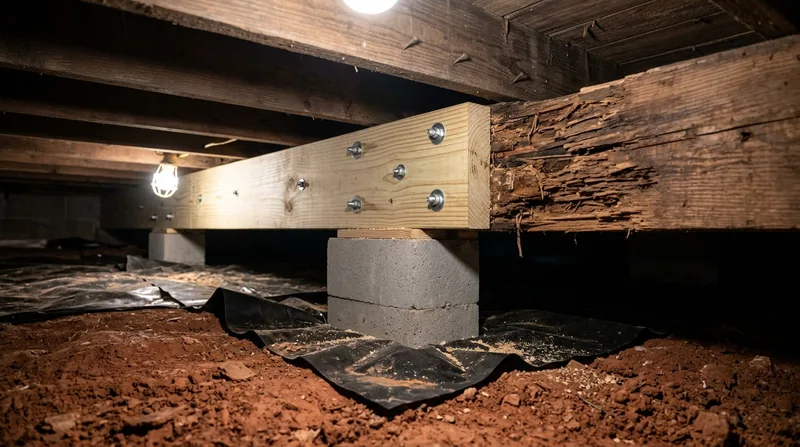




Floor Joist & Subfloor Repair in Springfield addresses one of the most common structural problems in the Ozarks: sagging, bouncy, or soft floors caused by moisture, settling foundations, and wood-destroying insects. Springfield's older homes, built from the 1880s through the early 1900s on the Springfield Plateau, sit over damp crawlspaces carved from red chert-laden clay and karst limestone that shifts unevenly over time. Hot, humid summers and wet springs keep sills, porch floors, and floor joists damp, while freeze-thaw cycles in winter and spring ice storms stress the framing. The result is rotted joists, failed subfloor sections, and floors that deflect underfoot. We sister or replace compromised joists and rebuild subfloor sections to level floors before finishes go back down, restoring safe, solid footing to kitchens, bathrooms, bedrooms, and living spaces across Springfield, Nixa, Ozark, and the surrounding region.
Why Floor Joist & Subfloor Repair Matters in Springfield Crawlspaces and Older Homes
Springfield's residential landscape is dominated by Queen Anne and Folk Victorian houses with tall wood windows and turned porch posts in the Walnut Street and Midtown historic districts, Craftsman bungalows and foursquares under big oaks near Missouri State, and 1950s-70s ranches over crawlspaces and partial basements in Southern Hills and Galloway. All of these rest on stone or block foundations over crawlspaces where moisture accumulates from the red clay below, poor drainage, and seasonal water tables that rise in spring. Floor joists and sill plates in these crawlspaces are exposed to constant dampness, and wood fails quickly in that environment. Termites, which swarm across southwest Missouri in spring, also work up through sills and into joists, creating voids and soft spots that cause floors to sag and bounce.
- Sagging or bouncy floors signal joists that have lost bearing capacity or subfloor that has delaminated from moisture or insect damage.
- Soft spots underfoot, especially in bathrooms and kitchens, often indicate localized rot in joists or subfloor that must be replaced or sistered before finishes can be safely installed.
- Uneven floors across a room or between rooms may point to settling piers, failed joists, or a combination of both, requiring structural assessment and targeted repair.
- Crawlspace inspections reveal the root cause: standing water, termite mud tubes, carpenter ant galleries, or active wood rot that must be addressed before joists are repaired.
Addressing floor joist and subfloor problems early prevents compounding damage to walls, finishes, and the structural integrity of the home. Delaying repair allows rot and insect damage to spread, making the eventual fix more costly and invasive.
Key info: Springfield sits on the Springfield Plateau over red clay and karst limestone riddled with sinkholes and springs. Older homes in Rountree, Phelps Grove, and the historic districts rest on stone piers over crawlspaces where moisture and termite activity concentrate. A crawlspace inspection is the first step in diagnosing floor problems. For guidance on permits and inspections, contact the City of Springfield Building and Development Services.
How We Repair Floor Joists & Subfloor: The Process in Springfield Homes
Our approach to floor joist and subfloor repair begins with a thorough crawlspace inspection to identify the cause of the problem: rot, termite damage, settling piers, or a combination. We document moisture levels, inspect joists and sills for soft wood, look for termite mud tubes or carpenter ant galleries, and assess the condition of the subfloor above. Once we understand the scope, we propose repair or replacement, always favoring repair when the wood structure justifies it. For more information on how we handle wood rot and termite damage, see our Wood Rot & Dry Rot Repair and Termite Damage Repair pages.
- We excavate or clear the crawlspace to access the damaged joists and subfloor, ensuring safe working conditions and room to install bracing and new lumber.
- We remove or cut out rot and damaged wood, exposing sound material on all sides so we can accurately assess the extent of failure and plan the repair.
- We sister sound joists alongside compromised ones using bolts and blocking to transfer load, or we remove and replace joists entirely if rot extends too far up the joist or into the bearing points.
- We rebuild subfloor sections using pressure-treated plywood or solid lumber, fastening it securely to the joists and ensuring a level, solid surface for finishes.
- We level the floor before finishes go down, using shims or adjustable posts to correct deflection and ensure cabinets, tile, and flooring sit flat and true.
The entire process is documented with photographs and written notes so you have a clear record of what was found, what was done, and what the crawlspace looks like after repair.
Local example: A 1920s Craftsman bungalow in Rountree near Missouri State had a soft, bouncy kitchen floor and a sagging bathroom corner. Crawlspace inspection revealed two rotted joists running the length of the kitchen, a failed sill plate under the bathroom wall, and evidence of past termite activity. We sistered the kitchen joists with 2x10 pressure-treated lumber bolted every 16 inches, replaced the sill plate with pressure-treated 2x6, and rebuilt 32 square feet of subfloor. The floor leveled within 1/4 inch and has remained solid for five years.
| Approach | Description | Best for |
|---|---|---|
| Sistering | Installing a sound joist alongside a compromised one, bolted together to share load and prevent deflection. | Localized rot or soft spots in the middle or lower third of a joist where bearing points remain sound. |
| Full Joist Replacement | Removing a rotted or failed joist and installing a new pressure-treated or solid lumber joist of the same dimension and grade. | Rot extending into bearing points, joists crushed by settling piers, or damage too severe for sistering to be effective. |
| Subfloor Patching | Cutting out rotted or delaminated subfloor and installing new pressure-treated plywood or solid lumber, fastened to sound joists below. | Localized soft spots, water damage, or termite galleries in subfloor that do not compromise the joists supporting it. |
| Sill Plate Replacement | Removing rotted sill plate (the horizontal member connecting joists to the foundation) and installing new pressure-treated lumber, bolted to the foundation. | Rot in the sill that undermines joist bearing or allows water intrusion into the crawlspace and framing above. |
| Floor Leveling | Using shims, adjustable posts, or blocking to correct deflection and ensure the subfloor sits level before finishes are installed. | Any repair job where deflection exists and finishes (tile, hardwood, vinyl) require a flat, true surface for proper installation. |
Floor Joist & Subfloor Repair Cost in Springfield: What to Expect
Floor joist and subfloor repair costs in Springfield start at $1,800 for straightforward sistering of one or two joists in a confined area with good crawlspace access. Costs rise with the number of joists affected, the extent of rot, the need for full joist replacement versus sistering, subfloor area to be rebuilt, and how difficult access is. A kitchen with three rotted joists, failed sill plate, and 40 square feet of subfloor damage typically runs $3,500 to $5,500. A large-scale crawlspace project affecting multiple rooms or requiring significant structural work may reach $8,000 or more. The best way to understand cost for your home is to request a free estimate and have us inspect the crawlspace in person.
Several factors move the price within or above that range. Joist count and damage extent are the primary drivers: two rotted joists cost less to repair than six. Species and lumber grade matter too; pressure-treated Douglas fir or Southern pine is standard, but special grades or sizes add cost. Access difficulty affects labor: a low crawlspace with poor entry and obstructions like HVAC ducts or water lines takes longer to work in. Subfloor area to be rebuilt is measured in square feet; larger sections cost more. Leveling complexity may require adjustable posts or additional blocking. Moisture or drainage issues that must be addressed separately (gutters, grading, sump pump) may be recommended but are outside the scope of joist repair itself.
We always provide a written estimate before work begins, detailing the joists and subfloor to be repaired, materials, labor, and timeline. If you are working with insurance on storm or water damage, we can help document the damage for your claim. See our full pricing overview for more detail on how we structure estimates and what factors move the cost up.
Floor Joist & Subfloor Repair Near Me: What Springfield Homeowners Should Know When Hiring a Carpenter
Hiring the right carpenter for floor joist and subfloor repair is critical because the work is structural and often hidden from view once it is complete. You cannot inspect a sistered joist or subfloor repair after drywall and flooring are installed, so the quality of the workmanship and the integrity of the materials must be trustworthy from the start. Look for a contractor who takes time to inspect the crawlspace thoroughly, explains the problem clearly, proposes repair before replacement when honest, and provides a detailed written estimate with materials and labor itemized. Get at least two or three estimates so you can compare scope, approach, and price. Check references from past customers, especially those in Springfield or the surrounding area, and ask specifically about floor repair projects.
Verify that the contractor is fully insured and ask for a certificate of insurance naming you as additional insured. Ask about permits: if the work involves altering or removing a load-bearing wall or significantly changing the structural layout of the house, a permit is likely required, and your local building department (Springfield Building and Development Services) can advise on thresholds and requirements. If your home is in a historic district like Walnut Street or Midtown, check with the Springfield Historic Preservation Commission about any restrictions on materials or methods. Some homeowners associations in newer subdivisions may also have rules about contractor credentials or work schedules; verify these before booking.
Ask the contractor how they handle crawlspace conditions: do they take photographs, do they provide a written report of what was found and what was done, and do they dispose of debris responsibly? A reputable contractor will document the work so you have a record for your home's file and for future resale or insurance purposes. Contact us at Springfield Carpentry to schedule a free crawlspace inspection and estimate for your floor repair project.
Floor Joist & Subfloor Repair in Springfield: Pricing Guide
| Service | Price | Details |
|---|---|---|
| Single joist sistering or small subfloor patch | Starting at $1,800 | One or two compromised joists sistered or one small subfloor section repaired in accessible crawlspace. |
| Multiple joist repair with subfloor rebuild | Starting at $3,500 | Three to four rotted joists sistered or replaced with 20 to 40 square feet of subfloor rebuilt and leveled. |
| Large-scale crawlspace project | Starting at $6,000 | Five or more joists, significant subfloor damage, sill plate replacement, and floor leveling across multiple rooms. |
| Complex or difficult-access job | On estimate | Low crawlspace, obstructions like HVAC ducts or plumbing, load-bearing wall involvement, or combination repairs require on-site assessment. |
| Travel and estimate | Free | No charge for crawlspace inspection and written estimate in Springfield and surrounding areas, response within 24 hours. |
Indicative pricing, the exact cost depends on square footage, finish, and site access. Free personalized estimate within 24h at (417) 815-0186.


