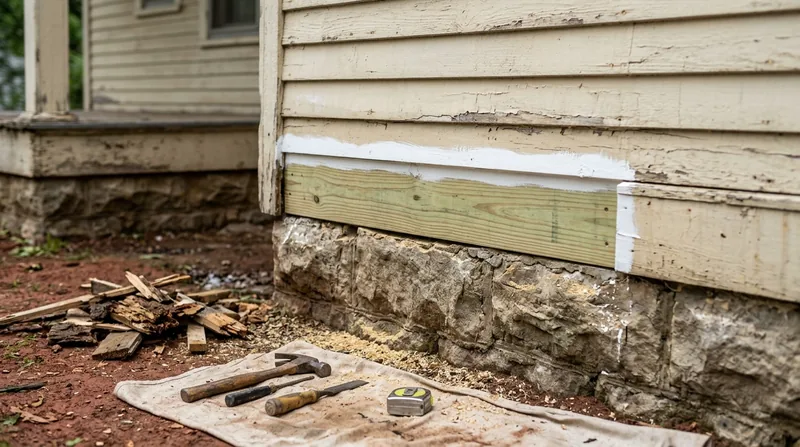




The humid summers, wet springs and freeze-thaw winters of Springfield's Ozark plateau create a relentless cycle of moisture absorption and wood failure. Whether you own a Queen Anne Victorian on Walnut Street, a Craftsman bungalow near Missouri State, or a 1950s ranch in Southern Hills, the sill plates, porch floors, window frames and fascia boards that frame your home are under constant assault from rain, ice and temperature swings. Wood rot and dry rot repair is not cosmetic maintenance: it is the difference between a sound structure and one that settles unevenly, creaks, and loses its ability to carry load. We cut out decayed framing, siding and trim, treat the surrounding wood to arrest further decay, and rebuild with rot-resistant lumber. This is permanent repair, not a patch.
Why Wood Rot and Dry Rot Repair Matters in Springfield Homes
Springfield sits on the Springfield Plateau, a landscape of red clay and chert over karst limestone that settles unevenly beneath older homes. Most houses built before 1960 rest on stone or block foundations over crawlspaces and damp cellars. Water finds its way in. Combined with the region's warm, humid summers and the freeze-thaw cycles of winter, wood exposed to foundation moisture, poor drainage or damaged gutters begins to fail within years, not decades. Sill plates soften and lose bearing capacity. Floor joists sag. Porch posts rot from the bottom up. Window sills and exterior trim become sponges. The longer rot spreads unchecked, the more expensive the repair becomes, and the greater the risk of structural settlement or failure.
- Sill plates and rim joists that lose integrity allow floors to settle and walls to shift out of plumb.
- Porch posts and deck framing that rot from moisture exposure become a safety hazard and require replacement rather than repair.
- Window sills and exterior trim that decay accelerate water infiltration into walls and framing, spreading the damage further.
- Fascia, soffit and gutter failures allow water to run down into siding and subfloor, turning a minor repair into a major one.
- Structural members such as floor joists and beams that weaken from rot can no longer support load and must be sistered or replaced.
Catching rot early and removing only the decayed wood, then treating and rebuilding, stops the cycle and restores the structural integrity your home needs to last another century.
Key info: In Springfield's climate, the most vulnerable wood is on the north side of homes, under eaves and porches, and anywhere gutters have failed or downspouts drain onto soil instead of away from the foundation. Historic districts like Midtown and Rountree see more rot damage than newer subdivisions, but freeze-thaw damage affects every neighborhood.
For detailed guidance on moisture and structural risk, the City of Springfield Building and Planning Division offers resources on foundation maintenance and drainage best practices for homeowners.
How We Repair Wood Rot and Dry Rot: Our Process
We begin every job with a careful inspection to identify the full extent of decay. Rot spreads invisibly through wood, so we probe sills, joists, posts and framing members with tools and a trained eye to find soft wood that has lost its structural integrity. Once we have mapped the damage, we cut out all decayed material, working back to sound wood. We then treat the exposed surrounding wood with a wood preservative to arrest any early-stage decay. Finally, we rebuild the damaged section with pressure-treated lumber, redwood, Douglas fir or other rot-resistant species appropriate to the application. The repair is permanent, not a cosmetic cover-up.
- We inspect the damaged area and probe framing, sills and trim to identify the full extent of decay, including hidden rot within structural members.
- We remove all softened, discolored or compromised wood, cutting back to solid material and creating a clean edge for the new repair.
- We treat the exposed surrounding wood with a wood preservative to slow any early-stage decay and protect the repair zone.
- We rebuild the damaged section with rot-resistant lumber, matching the species, dimension and finish of the original where appearance matters.
- We allow adequate ventilation and drainage around the repair to prevent moisture re-accumulation and future failure.
The entire process is permanent repair. We do not use epoxy fillers, wood hardeners or cosmetic patches. If the damage is too extensive to repair cost-effectively, we will tell you so and recommend replacement.
Example: A homeowner in Rountree noticed soft wood around the base of a porch post during spring. We excavated the soil, removed 18 inches of rotted post and sill framing, treated the surrounding wood, and sistered a pressure-treated 4x4 alongside the remaining post to restore load capacity. The repair took two days and cost less than half the price of replacing the entire porch. The post is now sound for another 50 years.
For related structural work such as floor joist and subfloor repair, we apply the same approach: remove the decay, treat the zone, and rebuild with appropriate lumber.
Wood Rot Repair Methods and When to Use Them
| Approach | Description | Best for |
|---|---|---|
| Full removal and replacement | Cut out all decayed wood and rebuild the damaged section with new rot-resistant lumber, matching the original species and dimension. | Sill plates, rim joists, porch posts, window sills and any structural member where decay has compromised load capacity. |
| Sistering or reinforcement | Remove decayed wood and bolt a new pressure-treated member alongside or beneath the remaining sound framing to restore strength and stiffness. | Floor joists, beams and posts where partial decay allows the member to remain in place and be reinforced rather than removed. |
| Localized patch and treat | Cut out only the decayed portion of trim, siding or fascia, treat the exposed wood, and rebuild the removed section with rot-resistant lumber. | Exterior trim, window frames, fascia boards and decorative elements where the damage is isolated and does not affect structural integrity. |
| Wood preservation and monitoring | Apply wood preservative to early-stage decay and eliminate the source of moisture. Schedule follow-up inspections to monitor the treated area. | Areas with minor discoloration or soft spots caught early, combined with gutter repair or drainage improvement to stop water intrusion. |
Wood Rot and Dry Rot Repair Cost in Springfield: What to Expect
Wood rot repair in Springfield typically starts at $650 for a localized patch involving removal of decayed trim or fascia, wood treatment and replacement of a small section. Larger repairs involving structural members such as sill plates, floor joists or porch posts range from $1,200 to $3,500 or more, depending on the size of the damaged area, the structural complexity, and the type of lumber required. A full sill plate replacement or major joist repair can exceed $4,000. On-site inspection is essential because rot often hides inside framing, and the true scope of work does not become clear until we cut into the wood.
Several factors affect the final cost. The size and depth of the decay determines how much wood must be removed and replaced. Access matters: a rotted porch post is easier to reach than rot deep within a basement rim joist. The species of lumber used in the repair influences material cost; pressure-treated lumber is economical and durable, while redwood or cedar command a premium for appearance and natural rot resistance. Proximity to other systems such as plumbing, electrical or foundation work may require coordination or protective measures. If the damage is severe enough to require beam replacement or structural reinforcement, a licensed structural engineer may be needed to size the new member, and a permit will be required.
We recommend getting 2 or 3 estimates from local carpenters so you can compare scope, method and price. A low estimate that glosses over the full extent of decay is often a red flag. Our free estimate includes a thorough inspection, a clear explanation of what we found, the repair method we propose and a firm price quote with no surprises.
For a detailed breakdown of pricing for your specific repair, visit our pricing page or call us at (417) 815-0186 to schedule a free on-site estimate.
What to Look for When Hiring a Wood Rot Repair Contractor Near Me in Springfield
Choosing the right carpenter for wood rot repair is as important as the repair itself. A contractor who cuts corners or misses hidden decay will leave you with a failed repair and a larger problem down the road. Look for a local shop where the same carpenters do the work and stand behind it. Ask for references from recent jobs in Springfield or nearby towns such as Nixa, Ozark or Republic. A good contractor will explain what they found, why the repair method they propose is the right one, and what the wood will look like when finished. They will also discuss moisture control and drainage to prevent the rot from returning.
Check that your contractor is fully insured and carries liability and workers compensation coverage. Get multiple estimates so you can compare scope and price. Ask whether the contractor has experience with the specific type of damage you have: historic wood in an older home, structural framing, or exterior trim. If the repair involves a structural member or a load-bearing wall, ask whether they will work with a licensed structural engineer if sizing or a permit is needed. Understand local permitting requirements by contacting the Springfield Building and Planning Division before you hire, so there are no surprises. If your home is in a historic district such as Midtown or Walnut Street, check whether there are design guidelines or review requirements for exterior repairs.
Call Springfield Carpentry at (417) 815-0186 for a free, no-obligation estimate. We will inspect your damage, explain what we found, and give you a firm price before we start work.
Wood Rot & Dry Rot Repair in Springfield: Pricing Guide
| Service | Price | Details |
|---|---|---|
| Localized trim or fascia repair | Starting at $650 | Removal of decayed wood, treatment and replacement of a small section, typically completed in one day |
| Sill plate or rim joist repair | Starting at $1,200 | Removal of rotted framing, treatment and replacement with pressure-treated lumber, cost varies with the length of damaged member |
| Porch post or structural member repair | Starting at $1,500 | Removal of rotted wood, sistering or replacement of load-bearing post or joist, cost increases with member size and structural complexity |
| Major or multi-member rot repair | On estimate | Extensive decay involving multiple structural members, hidden rot or combination with moisture control work requires on-site inspection for accurate pricing |
| Travel | Included | No separate charge for estimates or work within Springfield and surrounding service areas |
| Free estimate | Free | Full inspection and written quote provided within 24 hours, no obligation to book, call (417) 815-0186 |
Indicative pricing, the exact cost depends on square footage, finish, and site access. Free personalized estimate within 24h at (417) 815-0186.


