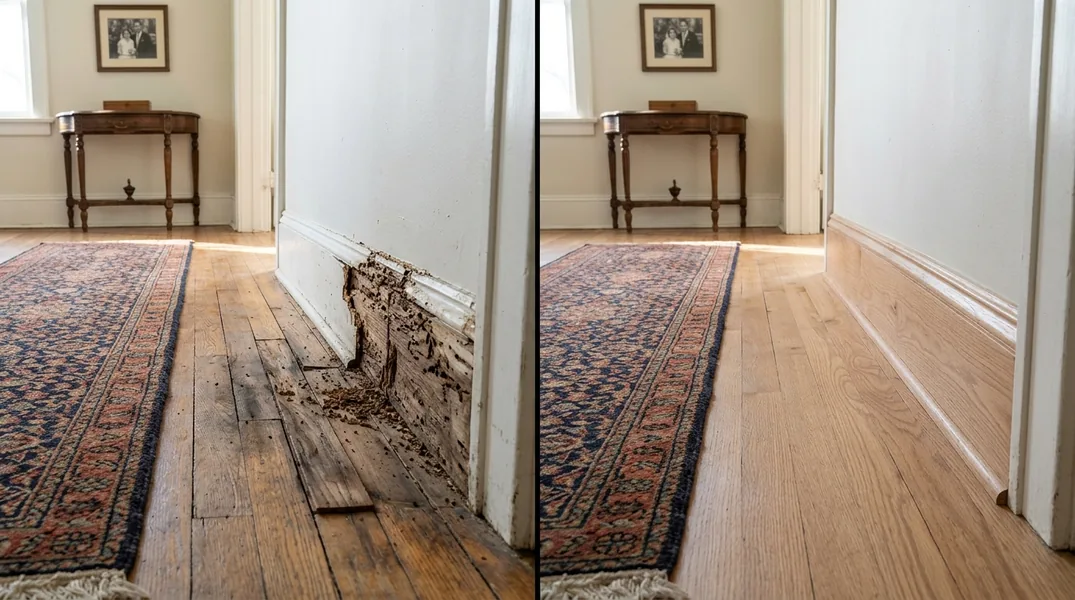
Understanding Wood Rot vs. Termite Damage: What's the Difference?
When you discover soft, discolored wood on your home, the first question is usually: what caused this? Wood rot and termite damage are two distinct problems, though they can sometimes occur together and require different repair approaches.
Wood rot, also called dry rot or wet rot depending on moisture conditions, is caused by fungal decay. The wood becomes soft, spongy, and loses its structural integrity as fungi break down the cellulose. Termite damage, by contrast, is caused by insects that tunnel through wood as they feed. Termite galleries often leave thin shells of wood on the surface while hollowing out the interior. Identifying which problem you have is the first step toward deciding whether Wood Rot & Dry Rot Repair or Termite Damage Repair is your best path forward.
Both problems share one critical trait: they worsen quickly if left untreated. Moisture, poor ventilation, and lack of maintenance accelerate rot. Termites work year-round, especially in warm climates like ours here in Springfield. The longer you wait, the more extensive the damage becomes, and the higher your repair costs climb.
When Can You Repair Rotted Wood Without Replacing It?
The good news: not every instance of wood rot means you need to tear out and replace entire sections of your home. Surface-level rot that affects only the outer layers of wood can sometimes be repaired rather than replaced. If the rot is caught early and hasn't penetrated deep into structural members, a skilled carpenter can remove the affected wood and fill the void with epoxy consolidants or wood fillers designed to restore function and appearance.
The key factor is depth and extent. If rot is limited to the outer one to two inches of a beam, joist, or board, repair may be viable. Your carpenter will test the wood's integrity using a moisture meter and a simple probe test. If the wood beneath the rotted surface is still solid and the structural member isn't bearing excessive load, repair is often the most cost-effective option. This approach preserves the original material and avoids the disruption of major replacement work.
However, repair only works when the underlying cause of moisture is addressed. If you patch rotted wood but don't fix the leak, poor drainage, or ventilation that caused it, the rot will return. This is why any honest repair strategy includes identifying and eliminating the moisture source. Without that step, you're simply buying time before the problem resurfaces.
Signs That Replacement Is Your Only Real Option
Some situations demand complete replacement, not repair. If wood rot has penetrated more than half the thickness of a structural member like a floor joist, rim board, or load-bearing post, the wood has lost too much integrity to be safely restored. Structural members need to carry weight reliably, and compromised wood cannot be trusted to do that job long-term, even after epoxy treatment.
Termite damage often requires replacement as well. Because termites hollow out wood from the inside, the thin outer shell may appear intact while the interior is largely gone. Probing a termite-damaged board typically reveals extensive voids that cannot be safely repaired. Additionally, if termites have damaged multiple members or if the infestation is active, you'll need professional Termite Damage Repair that includes both treatment and structural restoration.
For siding and exterior trim, replacement is often the practical choice even if repair is technically possible. Cosmetic concerns matter here. Patched siding never quite matches the original, and if you're replacing one board, nearby boards may show age and weathering by comparison. Many homeowners choose to replace rotted wood siding rather than settle for a patchwork appearance. When it comes to Ozark and other areas around Springfield with older homes, this decision often extends to fascia, soffit, and trim work where appearance and weather protection are equally important.
Wood Rot & Dry Rot Repair Cost in Springfield: What to Budget
The pricing for wood rot repair varies dramatically depending on whether you're repairing or replacing, how extensive the damage is, and which part of your home is affected. A small area of surface rot on trim might cost $200 to $400 to repair. Replacing a rotted section of fascia or soffit could run $500 to $1,500. Structural repairs are significantly more expensive because they require precision work and often demand temporary support systems while damaged members are being replaced.
If you need Floor Joist & Subfloor Repair due to rot, expect costs in the range of $2,000 to $8,000 or more, depending on how many joists are affected and how accessible they are. Beam replacement and load-bearing work costs even more because the structural complexity is higher. A single compromised beam might require temporary support posts, careful removal, and installation of a new beam sized to handle the load, which can easily exceed $5,000 to $15,000.
Termite damage repair follows a similar scale, but often includes the cost of pest control treatment in addition to structural repairs. The best way to understand your specific situation is to request a free estimate from Springfield Carpentry. We'll assess the damage, identify what can be repaired versus what must be replaced, and provide transparent pricing so you know exactly what to budget. Call us at (417) 815-0186 to schedule your inspection.
The Importance of Professional Inspection and Diagnosis
One of the most common mistakes homeowners make is attempting to diagnose wood rot severity on their own. What looks like minor surface damage from the outside may hide extensive decay beneath. Conversely, wood that appears severely damaged might only need surface repair. A professional inspection uses proper tools, moisture meters, and structural knowledge to determine what's really happening inside the wood.
Professional carpenters also understand building codes and structural requirements in ways that DIY homeowners typically don't. If you're dealing with damage to a load-bearing member, the repair or replacement must meet code requirements for your area. Improper repairs can create liability issues and may fail inspection if you ever sell your home. When you work with Springfield Carpentry, you're getting expertise that protects both your home's safety and your investment.
Additionally, professionals can often spot the root cause of the problem. Is there a roof leak above the damaged wood? Poor gutter drainage? Inadequate ventilation in a crawl space? Identifying these issues ensures your repair stays permanent. We don't just fix the symptom; we help you understand and address the cause so the problem doesn't return in six months.
Repair or Replace: Making Your Decision
The decision to repair or replace rotted or termite-damaged wood ultimately depends on several factors: the extent of damage, the structural importance of the affected member, the cost comparison between repair and replacement, and your long-term plans for the home. A small repair might preserve original character in a historic home. A replacement might be more cost-effective and durable for a high-traffic structural area.
There's no one-size-fits-all answer, which is why getting professional guidance matters so much. Springfield Carpentry has been serving homeowners in Springfield and surrounding communities with honest assessments and quality work for years. We'll never pressure you toward the most expensive option. Instead, we'll present your realistic choices, explain the pros and cons of each, and let you make an informed decision.
If you're facing wood rot, termite damage, or suspect either problem in your home, don't wait. Damage spreads quickly, and early intervention saves money. Contact Springfield Carpentry today at (417) 815-0186 or visit our website to request a free estimate. We'll give you the honest assessment you deserve.
Looking for a professional carpentry contractor in Springfield? Springfield Carpentry responds fast for all your carpentry needs.
Get a Free QuoteOur services: Wood Rot & Dry Rot Repair · Termite Damage Repair · Floor Joist & Subfloor Repair