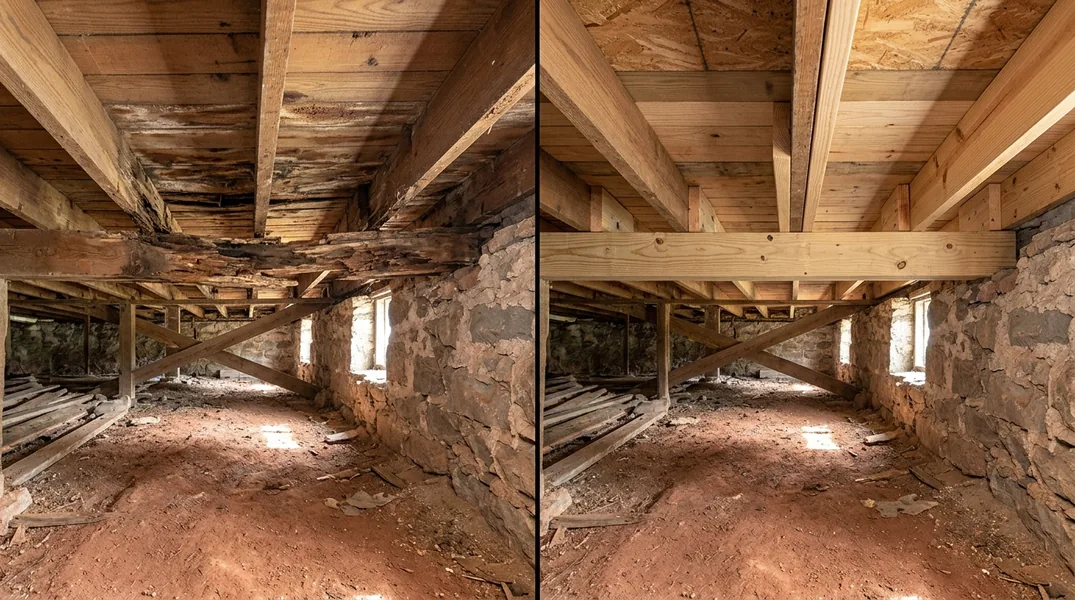
Why Is My Floor Sagging? Understanding Ozark Karst Geology
If you own a home in Springfield, you've likely heard about karst terrain. The Ozark plateau sits atop a network of underground caves, sinkholes, and dissolved limestone layers. This geological reality creates a unique challenge for homeowners: unstable ground that shifts and settles over time, causing floors to sag, crack, and slope in ways that homes built on solid bedrock simply don't experience.
A sagging floor isn't just an aesthetic problem or a minor inconvenience. It's your home's way of telling you that the foundation or support structure beneath it has lost integrity. In karst regions like ours, the culprits are often a combination of factors: soil subsidence from underground voids, water infiltration weakening the soil, and wooden support structures that have deteriorated from moisture exposure or pest damage. The longer you ignore a sagging floor, the more structural stress accumulates, potentially affecting walls, doors, windows, and the overall safety of your home.
Common Causes of Sagging Floors in Springfield Homes
Several specific issues lead to sagging floors in the Springfield area. The first and most common is Wood Rot & Dry Rot Repair in floor joists and support beams. Moisture from the crawl space, basement seepage, or plumbing leaks creates the perfect environment for fungal decay. Wood rot weakens the structural capacity of joists, causing them to sag under the weight of the home. Unlike termites, which leave hollow galleries, rot destroys the wood's density and load-bearing ability gradually and often invisibly.
Inadequate support is another major factor. Older homes in Springfield were sometimes built with undersized joists or insufficient support posts. As homes age and settle, these marginal designs become problematic. Additionally, Termite Damage Repair is critical because termites tunnel through wood, creating structural voids that compromise joist strength. Foundation settlement over karst terrain compounds these issues. When the soil beneath your foundation shifts or subsides due to underground cave systems, the entire structural system loses its level plane, and floors begin to slope.
Water damage and poor drainage are often the root cause of multiple problems. If your crawl space or basement stays damp, wood rot accelerates, and termites become more active. Addressing moisture is as important as repairing the damaged wood itself.
Floor Joist Repair and Sistering: How the Fix Works
Floor Joist & Subfloor Repair is one of the most effective solutions for sagging floors caused by damaged or weakened joists. The most common repair method is called sistering, where a new or reinforced joist is fastened alongside the damaged one, essentially doubling the support capacity of that section. Sistering works best when the rot or damage is localized to a single joist or a small section of a joist. A qualified carpenter will carefully assess the damage, remove any rotted wood, treat the area for moisture and pests, and then install a sister joist using proper fastening techniques and building code standards.
The process begins with accurate diagnosis. A professional will inspect the joist for soft spots, discoloration, and structural integrity using specialized tools and hands-on evaluation. Once damage is confirmed, the sister joist is selected based on the original joist's dimensions and the load requirements of that span. The new joist is bolted or nailed to the existing joist along its entire length, creating a combined beam that can handle the structural load. In some cases, additional support posts or Beam Replacement & Load-Bearing Wall Removal work may be necessary if the damage is extensive or if multiple joists are compromised.
After sistering is complete, the crawl space or basement must be addressed to prevent future moisture problems. This might include improving drainage, installing a vapor barrier, adding ventilation, or repairing plumbing leaks. Without moisture control, even a newly sistered joist will eventually rot again.
Sagging Floor Repair Cost in Springfield: What to Budget
The cost of sagging floor repair varies widely depending on the extent of damage, the number of joists affected, and the underlying cause. A single sistered joist might cost between $800 and $2,000, while extensive joist replacement or foundation work could run $5,000 to $15,000 or more. The best way to understand your specific situation and pricing is to request a free estimate from Springfield Carpentry. We'll evaluate your home, identify all problem areas, and provide a detailed cost breakdown before any work begins.
Several factors influence the final bill. The severity of rot or structural damage is primary. A joist with surface rot costs less to repair than one that's 50 percent compromised. The accessibility of the damaged joists also matters. Work in a tight crawl space takes longer than work in a basement. If the sagging is caused by foundation settlement rather than wood damage, additional structural support or foundation repair may be necessary, which adds to the cost. Finally, if moisture problems must be addressed to prevent future damage, drainage improvements or crawl space encapsulation will be factored into the estimate.
Don't view joist repair as an optional cosmetic fix. Ignoring sagging floors leads to more extensive and expensive damage down the road. Structural problems compound, affecting walls, ceilings, and the overall integrity of your home. Addressing the issue promptly protects your investment and keeps your family safe.
When to Call a Professional: Signs Your Floor Needs Attention
Several warning signs indicate that your floor needs professional evaluation. Visible sagging or sloping is the most obvious. Walk through your home and look for floors that dip in the middle of a room or slope toward a wall. Place a marble or ball on the floor. If it rolls, your floor is uneven. Doors and windows that stick or won't close properly often signal foundation movement or joist sagging. Cracks in walls, especially diagonal cracks, frequently accompany floor problems. A musty smell in the crawl space or basement suggests moisture and potential wood rot. Soft spots in the floor that feel spongy when you walk on them indicate advanced rot.
If you notice any of these signs, don't wait. Contact Springfield Carpentry at (417) 815-0186 or visit our website for a free estimate. Early intervention prevents small problems from becoming major structural failures. Our team has extensive experience with karst-related foundation and joist issues throughout the Springfield area, and we understand the unique challenges that Ozark geology presents.
Prevention and Long-Term Solutions for Springfield Homeowners
After your floor is repaired, focus on prevention to avoid future sagging. Moisture control is the single most important factor. Ensure your crawl space or basement is dry by installing proper drainage, grading soil away from the foundation, and repairing any plumbing leaks immediately. A vapor barrier in the crawl space reduces moisture from the ground. Ensure gutters and downspouts direct water at least six feet away from the foundation. Regular inspections of the crawl space or basement catch problems early before they become expensive repairs.
Regular maintenance of your home's structural systems pays dividends. Have your foundation and joists inspected every few years, especially if you live in an older home or in an area with known karst features. Termite inspections are equally important. Early detection of termite activity prevents the kind of structural damage that leads to sagging floors. If you're concerned about your home's foundation or floor condition, Springfield Carpentry is here to help. We serve homeowners throughout Springfield and surrounding areas with expert diagnosis, repair, and prevention strategies tailored to our unique geological setting. Call us at (417) 815-0186 today to schedule your inspection and take control of your home's structural health.
Looking for a professional carpentry contractor in Springfield? Springfield Carpentry responds fast for all your carpentry needs.
Get a Free QuoteOur services: Wood Rot & Dry Rot Repair · Termite Damage Repair · Floor Joist & Subfloor Repair